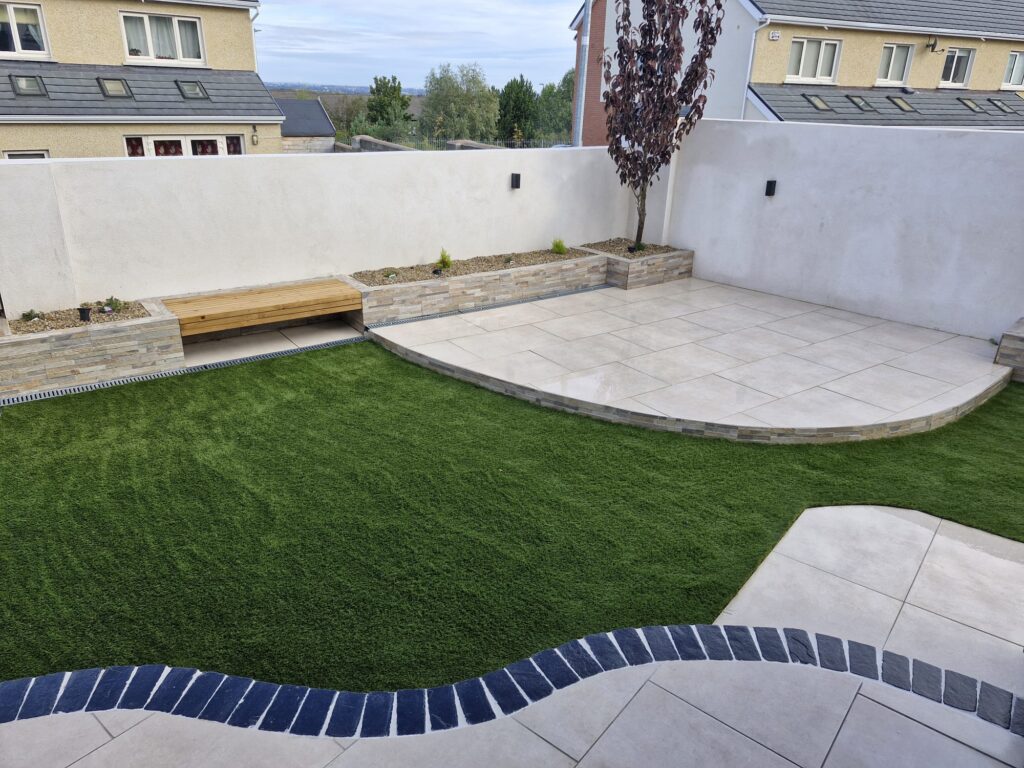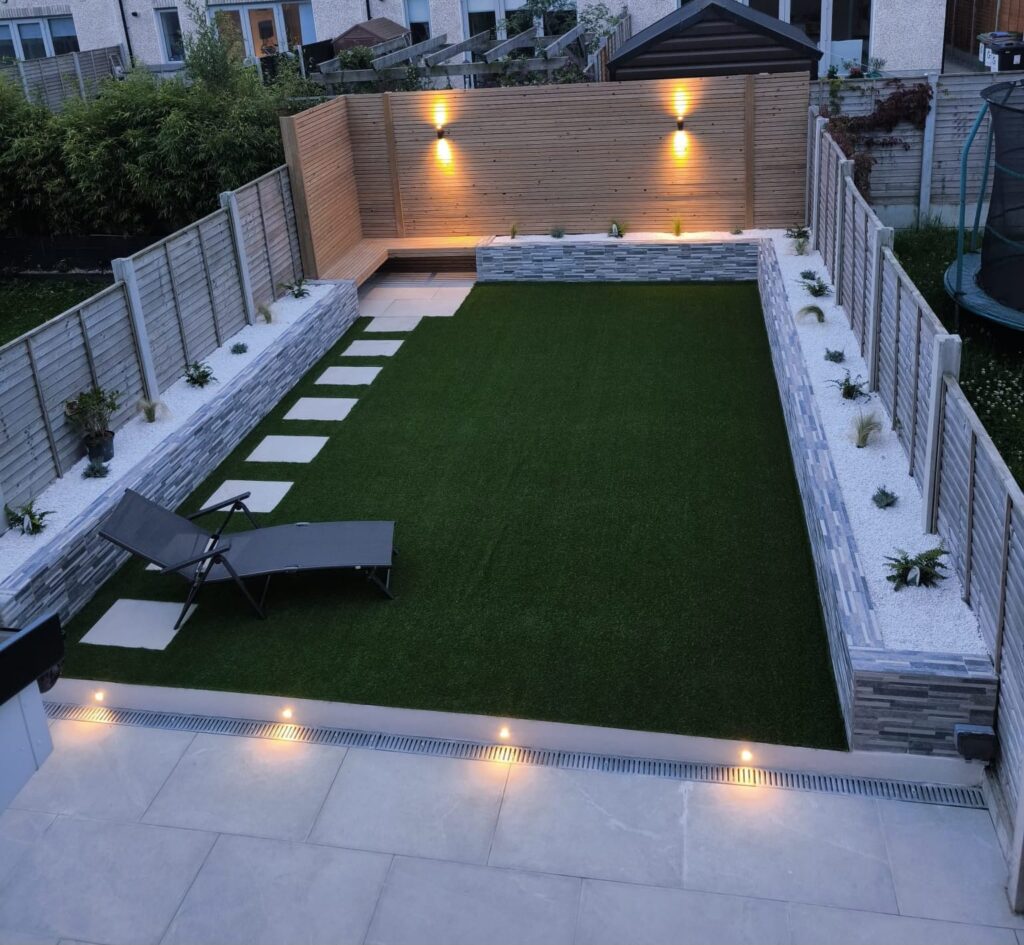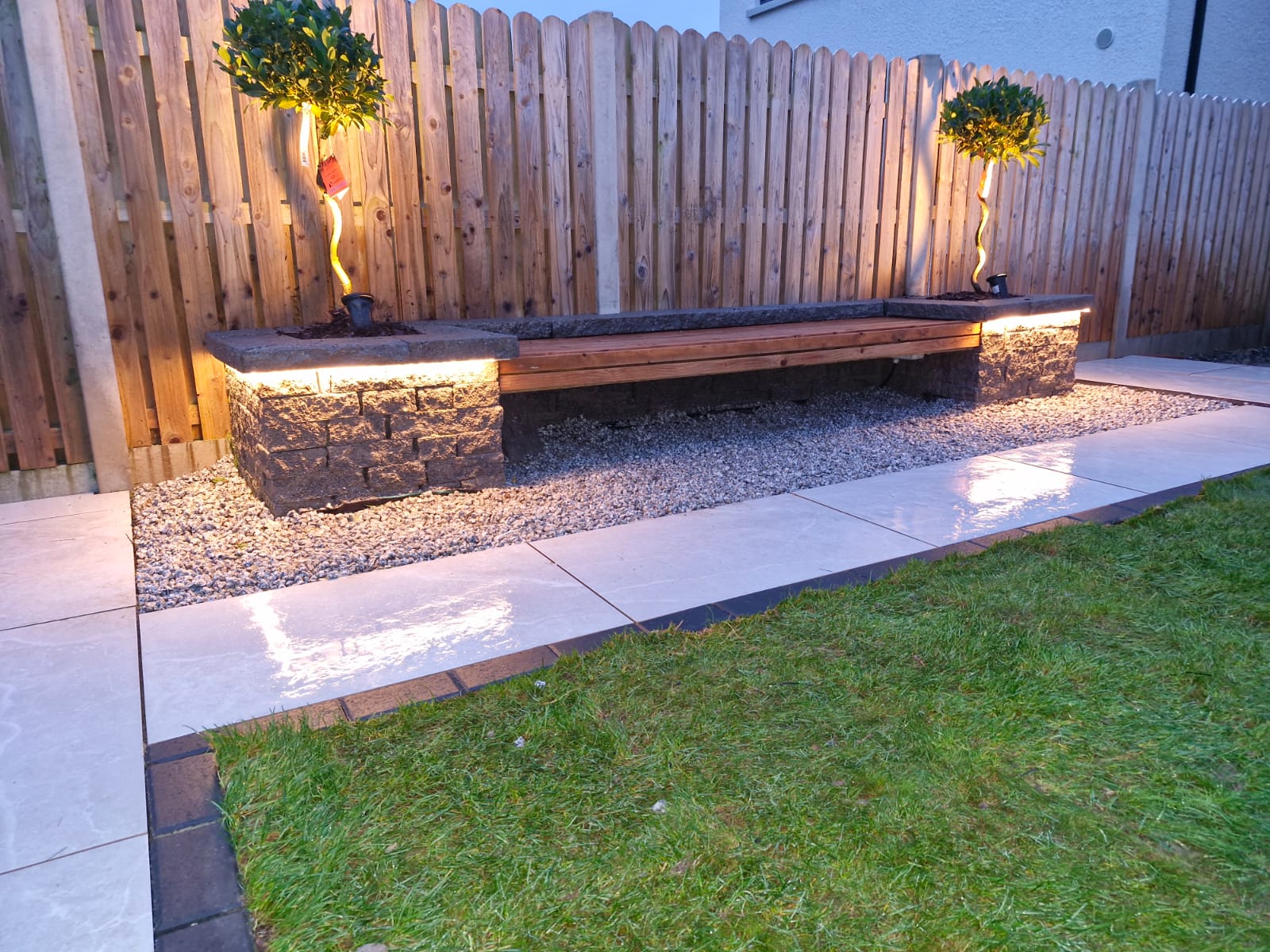
When comparing artificial grass vs natural grass Ireland has some important factors to consider, particularly its wet climate, drainage conditions and garden maintenance requirements.
Artificial grass offers a tidy appearance with relatively little ongoing maintenance, while natural grass provides the look and feel of a living lawn and brings environmental benefits that artificial surfaces cannot provide.
For Irish gardens, the decision can be particularly important because of our wet climate, drainage conditions and the amount of shade many gardens receive.
So which option is better?
The answer depends on your garden, lifestyle and what you want from your outdoor space.
Artificial Grass vs Natural Grass at a Glance
Here is a simple comparison:
| Artificial Grass | Natural Grass | |
|---|---|---|
| Maintenance | Low | Moderate to high |
| Mowing | No | Yes |
| Appearance year-round | Consistent | Changes seasonally |
| Initial cost | Usually higher | Usually lower |
| Mud | Very little if properly installed | Possible in wet conditions |
| Drainage | Depends heavily on installation | Depends on soil conditions |
| Feel | Synthetic | Natural |
| Biodiversity | Very limited | Better |
| Repairs | Sections may need replacing | Can often be reseeded |
| Lifespan | Limited | Can last indefinitely with care |
Neither option is automatically better for every homeowner.
Let’s look at the differences in more detail.
Advantages of Artificial Grass
1. Less Regular Maintenance
One of the main reasons homeowners choose artificial grass is convenience.
There is no regular mowing, feeding or reseeding.
It can therefore work well for homeowners who want a tidy garden but don’t want to spend much time maintaining a lawn.
Artificial grass still requires some maintenance, however. Leaves and debris need to be removed, weeds can occasionally appear around edges or through accumulated organic material, and the surface may need cleaning.
So it is better described as low maintenance rather than maintenance-free.
2. Consistent Appearance
A good-quality artificial lawn can maintain a similar appearance throughout the year.
Natural lawns change with the seasons and can become muddy, worn or patchy, particularly in heavily used areas.
For homeowners who prioritise a consistently neat appearance, artificial grass can therefore be attractive.
3. Useful for Small or Heavily Used Gardens
Artificial grass can work particularly well in smaller gardens where the same lawn area receives a lot of foot traffic.
This may include gardens used regularly by children or pets.
A natural lawn can become worn in frequently used areas, particularly during wet periods.
4. Can Work in Difficult Lawn Areas
Some gardens struggle to maintain healthy natural grass because of shade, poor soil or heavy use.
Artificial grass can provide an alternative in areas where maintaining a good natural lawn has repeatedly proven difficult.
However, existing drainage problems still need to be addressed during installation.
Disadvantages of Artificial Grass
Artificial grass also has drawbacks that should be considered before installation.
1. Higher Initial Installation Cost
Installing artificial grass properly normally involves much more than simply laying turf over the existing garden.
The project may require:
- Excavation
- Waste removal
- Sub-base installation
- Compaction
- Levelling
- Edging
- Drainage preparation
- Artificial turf installation
This means the upfront cost can be considerably higher than establishing a natural lawn.
If you’re considering artificial grass, you can also read our guide:
Artificial Grass Cost in Dublin in 2026: What Should You Expect?
Link this to your previous artificial-grass article.
2. It Isn’t a Natural Surface
Even high-quality artificial grass is still a manufactured surface.
Some homeowners love its clean, consistent appearance. Others strongly prefer the colour, texture and changing character of a living lawn.
This is largely a matter of personal preference.
3. Environmental Considerations
A natural lawn forms part of a living garden.
Artificial grass does not provide the same habitat or food opportunities for insects and other wildlife, and it replaces a living surface with manufactured material.
Natural lawns and planting can contribute to a more biodiverse garden.
If sustainability and wildlife are priorities for you, this is an important consideration.
4. Artificial Grass Can Get Hot
Artificial surfaces can become considerably warmer in strong direct sunlight.
This is worth considering if the lawn receives prolonged sun and will regularly be used by children or pets during warm weather.
Advantages of Natural Grass
1. Natural Look and Feel
For many homeowners, nothing quite replaces real grass.
It provides a softer, more natural appearance and works particularly well when combined with planting, trees and other living elements.
2. Better for a Living Garden
Natural grass supports a more biologically active garden than artificial turf.
If you’re trying to create a garden with planting and wildlife in mind, keeping at least some natural lawn can make sense.
3. Lower Initial Cost
Depending on the existing garden and ground preparation required, establishing natural grass using seed or turf will often cost less initially than a professionally installed artificial lawn.
However, natural grass does require ongoing maintenance.
4. It Can Be Repaired
Damaged or worn sections of natural lawn can often be repaired by reseeding or replacing small areas of turf.
With appropriate care, a natural lawn doesn’t have a fixed replacement date in the same way a manufactured surface eventually does.
Disadvantages of Natural Grass
The main disadvantage is maintenance.
A healthy lawn may require:
- Regular mowing
- Feeding
- Weed management
- Scarifying
- Aerating
- Reseeding
- Watering during prolonged dry periods
Irish weather can also make lawn maintenance challenging.
Heavy rain combined with poor drainage can produce muddy areas, while shaded sections may become thin or develop moss.
For someone who enjoys gardening, this may not be a problem.
For someone looking for the lowest-maintenance garden possible, it may be a significant consideration.
What About Dogs and Children?
Both artificial and natural grass can work in family gardens, but each has different advantages.
Artificial grass doesn’t become muddy in the same way as a worn natural lawn when properly constructed and drained.
However, it needs regular cleaning where pets use it, and drainage becomes particularly important.
Natural grass provides a softer living surface but can become worn in heavily trafficked areas.
There isn’t one universally better option — consider how intensively the garden will actually be used.
Can You Combine Artificial or Natural Grass With Porcelain Paving?
Absolutely.
In fact, combining lawn with paving and planting often creates a more interesting garden than using a single surface throughout.
A typical contemporary layout might include:
Porcelain patio + lawn + raised planting beds + garden lighting
The patio provides a practical area for dining and furniture, while the lawn introduces a softer central space.
You can read more about patio pricing in our guide:
How Much Does a Patio Cost in Dublin in 2026?
Which Is Better for a Small Dublin Garden?
This depends more on how you use the garden than its size.
For a small garden where you want maximum usable space and minimal maintenance, artificial grass may be practical.
However, a small natural lawn surrounded by good planting can create a much greener and more natural atmosphere.
There is also another option:
Don’t have a lawn at all.
A carefully designed small garden can use paving, gravel, planting beds, trees and other landscaping without needing either artificial or natural grass.
The important thing is to design the garden around your needs rather than assuming every garden must contain a lawn.
Think About the Whole Garden
Don’t make the lawn decision in isolation.
Consider how it will work with:
- Patio areas
- Planting
- Paths
- Garden rooms
- Seating
- Children’s play areas
- Pets
- Drainage
- Lighting
The lawn should be one component of the overall garden rather than something that simply fills whatever space is left.
Use 3D Garden Design to Compare Both Options
If you’re planning a complete garden transformation and can’t decide between artificial and natural grass, 3D garden design can help.
The same garden can be visualised using different layouts and materials before construction begins.
You can compare how your garden might look with:
Option A — Artificial grass
Option B — Natural lawn
Option C — More planting with a smaller lawn
This makes it much easier to understand how each option affects the overall character of the garden.
Artificial Grass or Natural Grass: Which Should You Choose?
Choose based on your priorities rather than simply following current garden trends.
Artificial grass may be suitable if you prioritise:
- Lower routine maintenance
- Consistent appearance
- A heavily used lawn area
- Avoiding muddy grass
- A simple contemporary look
Natural grass may be suitable if you prioritise:
- Natural materials
- Biodiversity
- A living garden
- Lower initial installation costs
- The traditional look and feel of real grass
Both can work well when properly incorporated into the overall garden design.
Planning a Garden Renovation in Dublin?
Whether you’re considering artificial grass, a natural lawn, porcelain paving or a complete garden transformation, having a clear plan before construction begins can save time and make quotations easier to compare.
GardenQuote helps homeowners connect with landscaping professionals across Dublin.
Tell us about your garden, what you’d like to change and your approximate budget.
Ready to start your garden project?
Visit our Get a Quote page and tell us what you’re planning.