If you’re planning a garden transformation but aren’t sure where to start, here are 10 garden renovation ideas Dublin homeowners can consider.
A well-designed garden can become one of the most enjoyable spaces in your home.
Whether you have a small Dublin garden, a typical suburban back garden or a larger outdoor space, there are plenty of ways to make it more practical, attractive and easier to maintain.
1. Create a Porcelain Patio
A patio is often the main outdoor living area of a garden.
Porcelain paving has become particularly popular for contemporary gardens because it creates a clean, modern finish and is available in a wide range of colours and styles.
A patio can be positioned directly outside the house to create a natural connection between indoor and outdoor living.
Consider adding:
- Outdoor dining furniture
- Comfortable seating
- Planters
- Garden lighting
- A barbecue area
- Pergola or covered area
Before choosing the size, think about the furniture you want to use. A patio can look large when empty but quickly become cramped once a dining table and chairs are added.
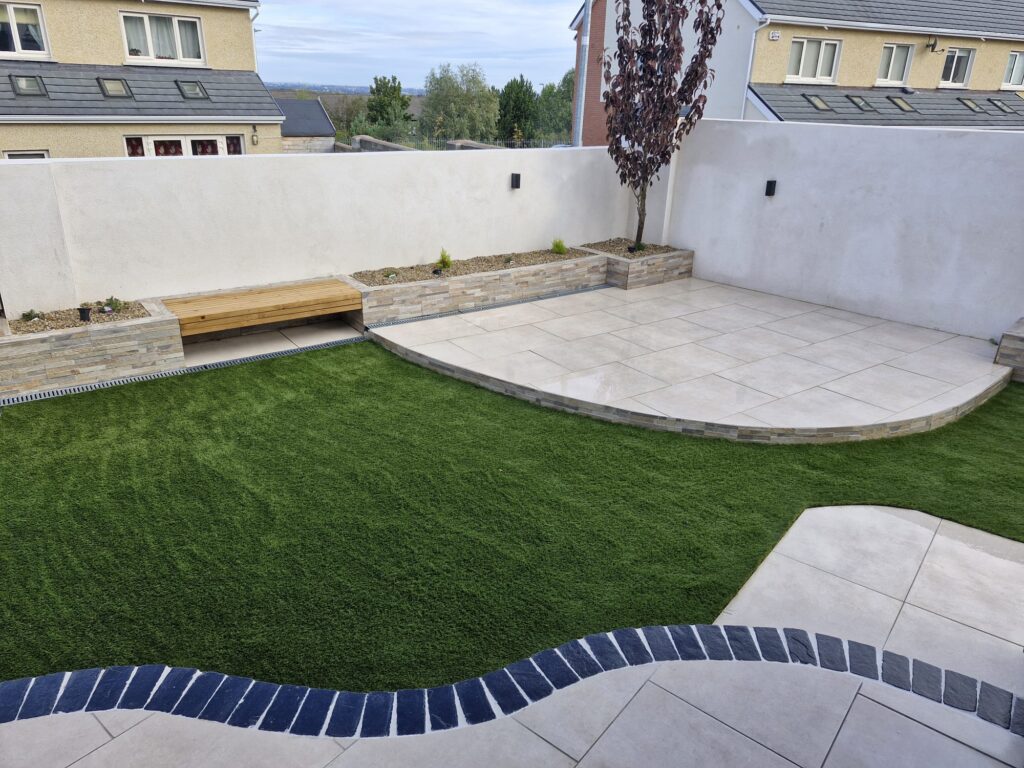
2. Combine Paving With a Lawn
You don’t necessarily need to choose between a completely paved garden and a lawn.
Combining different surfaces can make a garden much more interesting.
For example:
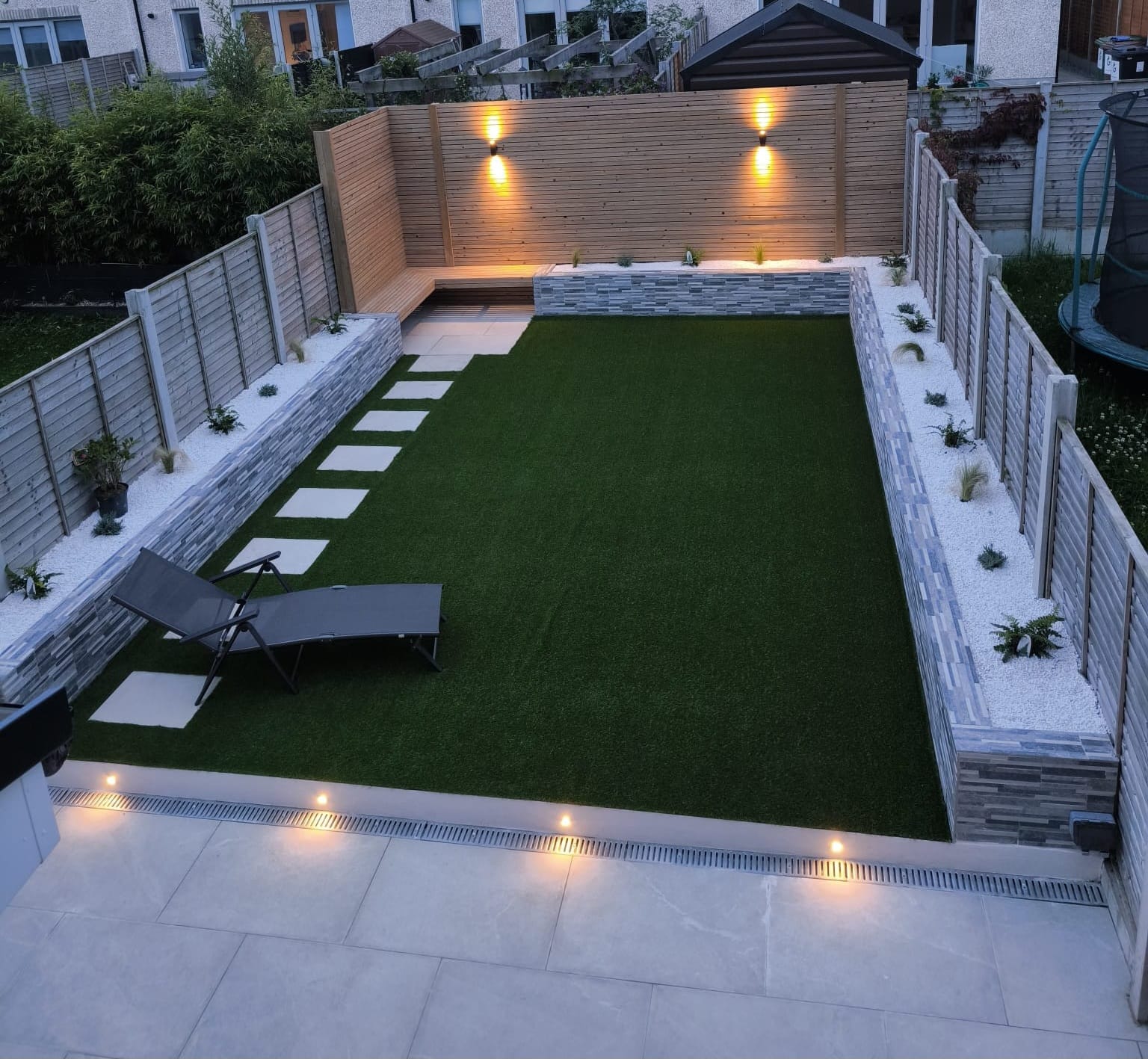
Porcelain patio + lawn + planting beds
creates clear zones while keeping some softness and greenery within the design.
Depending on your preferences, the lawn could be either natural or artificial grass.
The important part is getting the proportions right.
3. Add Raised Planting Beds
Raised beds are an excellent way to introduce plants into a modern garden.
They can help define different areas while adding height, colour and texture.
Raised beds can be constructed using materials such as:
- Rendered blockwork
- Brick
- Timber
- Stone
- Sleepers
Integrated seating can also be incorporated into larger raised beds.
Even relatively simple planting can dramatically soften a garden dominated by paving and hard landscaping.
4. Create an Outdoor Dining Area
If you enjoy entertaining, consider designing part of the garden specifically for outdoor dining.
Instead of simply finding somewhere to place a table after construction, plan the space around how it will actually be used.
Think about:
- Table size
- Number of chairs
- Access from the kitchen
- Evening sunlight
- Lighting
- Privacy
- Shelter from wind and rain
- Space around the furniture
Positioning can make a significant difference to how often you actually use the area.
5. Add a Garden Room
Garden rooms have become a popular way to create additional usable space without changing the main house.
Depending on the design and applicable planning requirements, a garden room might be used as:
- Home office
- Gym
- Games room
- Studio
- Entertainment space
- Relaxation area
If you’re planning a complete garden renovation, consider the garden room at the beginning of the design process.
Its position will influence paths, patios, planting, lighting and the overall layout of the garden.
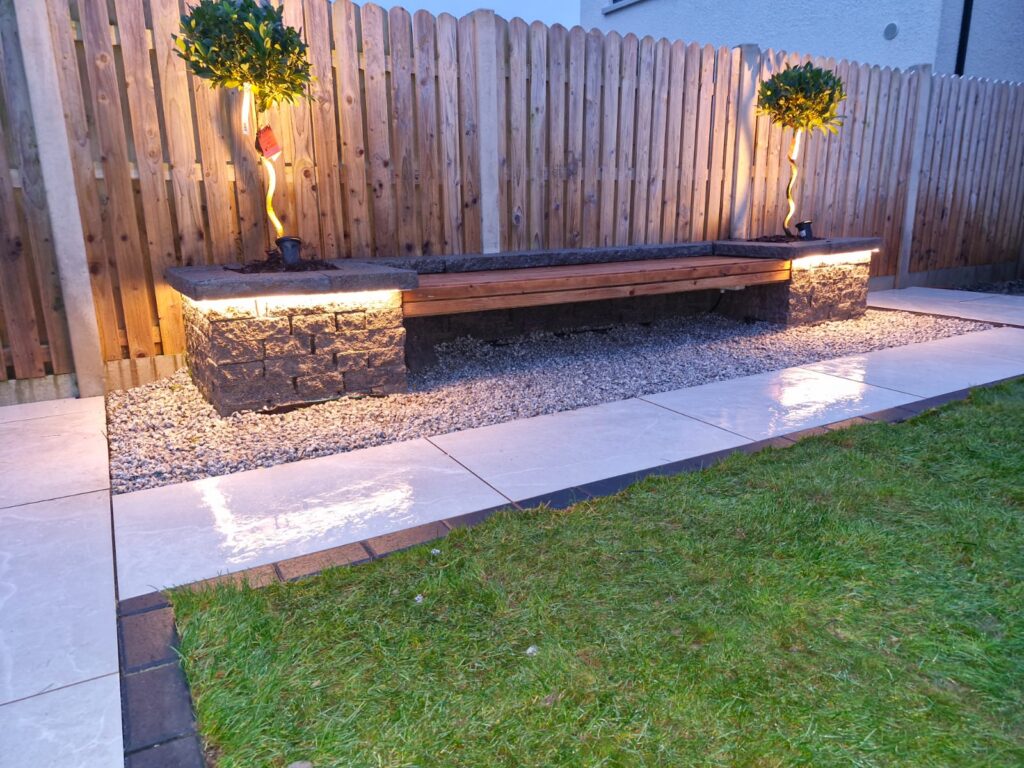
6. Introduce Garden Lighting
Lighting can completely change how a garden feels after dark.
Rather than relying on one powerful exterior light attached to the house, consider using several subtle lighting sources throughout the garden.
Lighting might be used to highlight:
- Paths
- Steps
- Trees
- Planting
- Raised beds
- Walls
- Garden structures
- Seating areas
Good garden lighting should normally complement the design rather than overpower it.
Planning electrical requirements before paving and other landscaping is installed can also avoid unnecessary disruption later.
7. Use Different Levels
A sloped garden doesn’t necessarily have to be completely flattened.
Different levels can become part of the design.
Steps, raised patios, retaining walls and planting can divide the garden into distinct zones and create more visual interest.
For example, you might have:
Upper patio → steps → lawn → lower seating area
However, changes in levels need careful planning, particularly when drainage and retaining structures are involved.
For more complicated gardens, professional design input can be especially valuable.
8. Create a Low-Maintenance Garden
Not everyone wants to spend every weekend maintaining their garden.
If low maintenance is important, consider that from the beginning.
Options could include:
- Porcelain paving
- Carefully selected planting
- Artificial grass
- Gravel areas
- Composite materials
- Defined planting beds
- Automated irrigation
Low maintenance doesn’t have to mean removing all plants.
Choosing suitable plants and placing them strategically can provide greenery without creating excessive maintenance.
9. Add Privacy
Privacy is particularly important in urban and suburban gardens.
There are several ways to make a garden feel more private without simply installing very tall fencing everywhere.
Depending on the property, options could include:
- Strategic planting
- Trees
- Screening
- Pergolas
- Decorative panels
- Raised beds with planting
- Carefully positioned garden structures
The aim is often to screen specific sightlines rather than completely enclose the garden.
Remember that boundary structures and other works may be subject to planning or other requirements, so check the applicable rules before construction.
10. Design the Whole Garden Together
One of the biggest improvements you can make is simply to plan the garden as one complete space.
It’s common for gardens to develop gradually:
First a patio is installed.
Then artificial grass is added.
Later a garden room appears.
Then somewhere has to be found for planting and lighting.
Each individual element might look good, but they don’t always work well together.
Planning the complete garden first allows you to consider how the patio, lawn, planting, paths, lighting, levels and structures relate to each other.
What Should You Include in a Garden Renovation?
There isn’t one perfect garden layout.
Your design should reflect how you actually want to use the space.
Before contacting a landscaper, think about your priorities.
Do you want somewhere for children to play?
Do you entertain regularly?
Would you like a garden room?
Do you enjoy gardening?
Is low maintenance important?
Do you need more privacy?
What’s your approximate budget?
Answering these questions can help turn a collection of ideas into a realistic project.
Consider 3D Garden Design Before Construction
For a larger renovation, it can be difficult to imagine how everything will look from a simple plan.
A 3D Garden Design allows you to visualise the proposed garden before construction begins.
You can explore different:
- Patio sizes
- Paving colours
- Lawn layouts
- Planting areas
- Garden rooms
- Furniture positions
- Steps and levels
- Lighting ideas
If something doesn’t look right, it’s much easier to change it during the design stage than after construction has started.
How Much Does a Garden Renovation Cost?
The cost depends heavily on the size of the garden and what’s included.
A project involving only a new patio and some planting will naturally cost significantly less than a complete transformation involving excavation, porcelain paving, drainage, walls, lighting, a garden room and extensive planting.
For a more detailed breakdown, read our guide:
How Much Does Landscaping Cost in Dublin in 2026?
Get Garden Renovation Quotes in Dublin
Once you have an idea of what you’d like to achieve, the next step is finding the right landscaping professional.
GardenQuote helps homeowners connect with landscaping professionals across Dublin.
Tell us about your garden, your ideas and your approximate budget to start planning your transformation.
Ready to transform your garden?
Visit our Get A Quote page and tell us about your project.